
Best overall: Hemmings for a classic-focused listing. Best for a documented ownership story: Moterno. Best for an enthusiast auction: Bring a Trailer. This 2026 guide compares the best place to sell a classic car online by selling format, buyer fit, and how much work you want to handle yourself.
- Hemmings is the best place to sell a classic car online when you want a classic-focused listing.
- Moterno is best for classic-car owners who want service records, documents, photos, and stories alongside a community listing.
- Bring a Trailer suits sellers comfortable with an auction and public questions about their car.
- Choose the selling format first; prepare service history, ownership documents, and condition photos before publishing.
Why this matters
Remember when you last changed the oil? A buyer wants that answer, too—and preferably the receipt. Choosing a marketplace is only part of selling a classic car; the other part is making its history and condition understandable to someone who has never seen it.
For your 2026 sale, distinguish between a listing you manage and an auction with a defined bidding process. A classified listing leaves you handling inquiries and negotiations. An auction organizes bidding, but it does not remove the need to answer questions or describe faults honestly.
Pick the format that suits your car and your willingness to participate. An unfinished project, a carefully documented restoration, and a later enthusiast car do not need identical sales presentations.
What makes the best classic-car selling platform?
Use these criteria before choosing where to list:
- Buyer fit: Does the platform focus on classics, later enthusiast cars, or general local buying and selling?
- Selling format: Do you want direct negotiation, public bidding, or an opportunity to meet a nearby buyer?
- Evidence presentation: Can your description clearly connect maintenance, restoration work, photographs, and known faults?
- Seller involvement: Are you comfortable answering detailed public questions, or do you prefer individual conversations?
- Transaction planning: How will you arrange inspection, verify payment, and complete the required ownership paperwork?
For 2026, treat these as a decision tree rather than a popularity contest. A recognizable marketplace name is not a substitute for the right sales format. Nor does a listing establish that a vehicle's condition claims are accurate.
Classic-car selling platforms at a glance
| Place | Best for | Standout feature | Key limitation |
|---|---|---|---|
| Moterno | Documented ownership stories | Digital vehicle records and a community marketplace | Preparing the history still takes work |
| Hemmings | Classic-focused classified listings | Automotive marketplace centered on collector vehicles | A listing still requires seller-managed inquiries |
| Bring a Trailer | Public enthusiast auctions | Vehicle auctions with public discussion | You need to participate in detailed questions |
| Cars & Bids | Later enthusiast cars | Auction focus on modern enthusiast vehicles | Its focus does not fit every classic |
| eBay Motors | Sellers comfortable with general online marketplaces | Vehicle listings within an established marketplace | You must make classic-specific details clear |
| Facebook Marketplace | Local inspection and collection | Location-based discovery and direct messaging | Inquiry quality varies |
No platform replaces an inspection, a clear ownership trail, or careful payment handling. Compare the current listing rules directly before committing your car to a selling process.
1. Moterno: best classic-car marketplace for documented ownership
Moterno combines a digital garage with a community marketplace. You can log service history, documents, photos, and stories for your vehicle, then browse or list cars for sale. That combination suits an owner whose car deserves more explanation than a short advertisement.
Moterno is best for classic-car owners who want to record their vehicle's history and list it in a community marketplace. Think workshop receipts, restoration photographs, and the story behind the car—not just a polished exterior shot.
Moterno pros:
- Records service history alongside vehicle documents.
- Gives you somewhere to keep photos and ownership stories.
- Includes a community marketplace for vehicle listings.
Moterno cons:
- You still need to collect and organize the supporting records.
- A recorded story is not an independent condition assessment.
Best for: An owner who wants the car's documented history to remain central to its presentation.
Keep the distinction between memory and evidence clear. A recollection of an engine rebuild belongs in the story; a dated workshop invoice supports the maintenance record. Verdict: Buy into this approach when documenting ownership matters as much as writing the advertisement.
2. Hemmings: best classic-car listing site for a classic-focused setting
Hemmings is an automotive publication and marketplace associated with collector vehicles. Its classified listings give you a classic-focused setting for describing the car and connecting with prospective buyers. Choose the classified route when you want to handle the conversation rather than organize your sale around bidding.
Your advertisement still needs to stand on its own. Explain the vehicle's identity, present condition, work completed, and work remaining; do not assume that an enthusiast audience already understands your particular car.
Hemmings pros:
- Provides a collector-car context for your listing.
- Suits a detailed description of an older vehicle.
- Offers a classified approach for direct buyer conversations.
Hemmings cons:
- You remain responsible for responding to inquiries and negotiating.
- A classic-focused listing does not establish mechanical condition.
Best for: A seller who wants a classic-focused classified advertisement rather than an auction-first process.
Verdict: Buy into Hemmings as the default classified choice for a classic-focused sale. The recommendation is about category fit, not a promise of sale speed or outcome.
3. Bring a Trailer: best classic-car auction for public discussion
Bring a Trailer runs online vehicle auctions with public comments. That format lets prospective bidders ask about condition, history, and details visible in the photographs. It suits sellers who are comfortable explaining their car in front of an enthusiast audience.
Prepare for questions before the listing goes live. An unexplained repair or a missing underside photograph is easier to address when you already have the records and images organized.
Bring a Trailer pros:
- Uses an auction format rather than open-ended classified negotiation.
- Makes vehicle questions and seller responses visible publicly.
- Gives detailed condition information a clear role in the listing discussion.
Bring a Trailer cons:
- Public discussion requires active seller attention.
- The auction submission process is not the same as publishing an unrestricted classified advertisement.
Best for: A seller prepared to support an auction with detailed photographs, records, and prompt answers.
Verdict: Buy into Bring a Trailer when you want public bidding and welcome detailed scrutiny. Skip this format if you do not want to participate in the discussion about your car.
4. Cars & Bids: best auction site for later enthusiast cars
Cars & Bids focuses on modern enthusiast vehicles rather than the full range of collector cars. It belongs on this shortlist when your idea of a classic is a later performance car, unusual daily driver, or other modern enthusiast vehicle. Check the platform's current vehicle criteria before preparing a submission.
The important distinction is fit. A car being special to you does not automatically make it suitable for every specialist auction.
Cars & Bids pros:
- Gives later enthusiast vehicles a focused auction setting.
- Supports public discussion around individual listings.
- Provides a bidding process for sellers who prefer an auction.
Cars & Bids cons:
- Its modern-enthusiast focus does not cover every classic-car category.
- Sellers need to prepare for questions and submission requirements.
Best for: Owners of later enthusiast cars that match the platform's focus.
Verdict: Buy into Cars & Bids for a suitable modern classic; skip it for a car outside that focus. Choose by vehicle category, not by which auction name you recognize first.
5. eBay Motors: best option for experienced online-marketplace sellers
eBay Motors includes vehicle listings within eBay's broader marketplace. It suits sellers already comfortable writing advertisements, managing messages, and checking the rules of an online listing process. Your classic-car description needs to explain details that a general marketplace visitor will not necessarily recognize.
Name the known faults plainly. Separate original equipment, later modifications, completed repairs, and unanswered questions instead of folding everything into a claim that the car is in great condition.
eBay Motors pros:
- Places vehicle listings in an established online marketplace.
- Lets sellers present descriptions and photographs together.
- Suits owners familiar with online listing management.
eBay Motors cons:
- The wider marketplace context is less specifically classic-focused.
- Sellers must check the applicable listing and transaction terms.
Best for: A seller who already understands online marketplaces and wants to manage the listing directly.
Verdict: Buy into eBay Motors when the format is familiar and you can write a precise advertisement. Hold until you understand the vehicle-listing rules if your experience is limited to selling ordinary household items.
6. Facebook Marketplace: best option for local inspection
Facebook Marketplace supports location-based listings and direct conversations. For a classic car, its practical use is finding someone who can arrange a nearby inspection and discuss collection. It suits sellers who prefer an in-person handover to organizing a distant transaction.
Set expectations in the advertisement. Describe whether the car runs, what needs attention, and what an inspection can include, without presenting an unsafe or unfinished vehicle as ready to drive.
Facebook Marketplace pros:
- Supports local discovery.
- Enables direct messaging with interested buyers.
- Suits sales where inspection and collection happen nearby.
Facebook Marketplace cons:
- Messages do not necessarily represent serious buying intent.
- You handle inquiry screening, meeting arrangements, and negotiation.
Best for: A seller who prioritizes local inspection and collection.
Verdict: Buy into Facebook Marketplace for a local-first sale. Skip it as your sole approach if you do not want to manage direct messages and meeting arrangements.
Prepare the car's story before you list
For a 2026 listing, organize the evidence before choosing your final advertisement wording. You do not need to turn your garage into an archive. You need a buyer to understand what happened, what supports it, and what remains unknown.
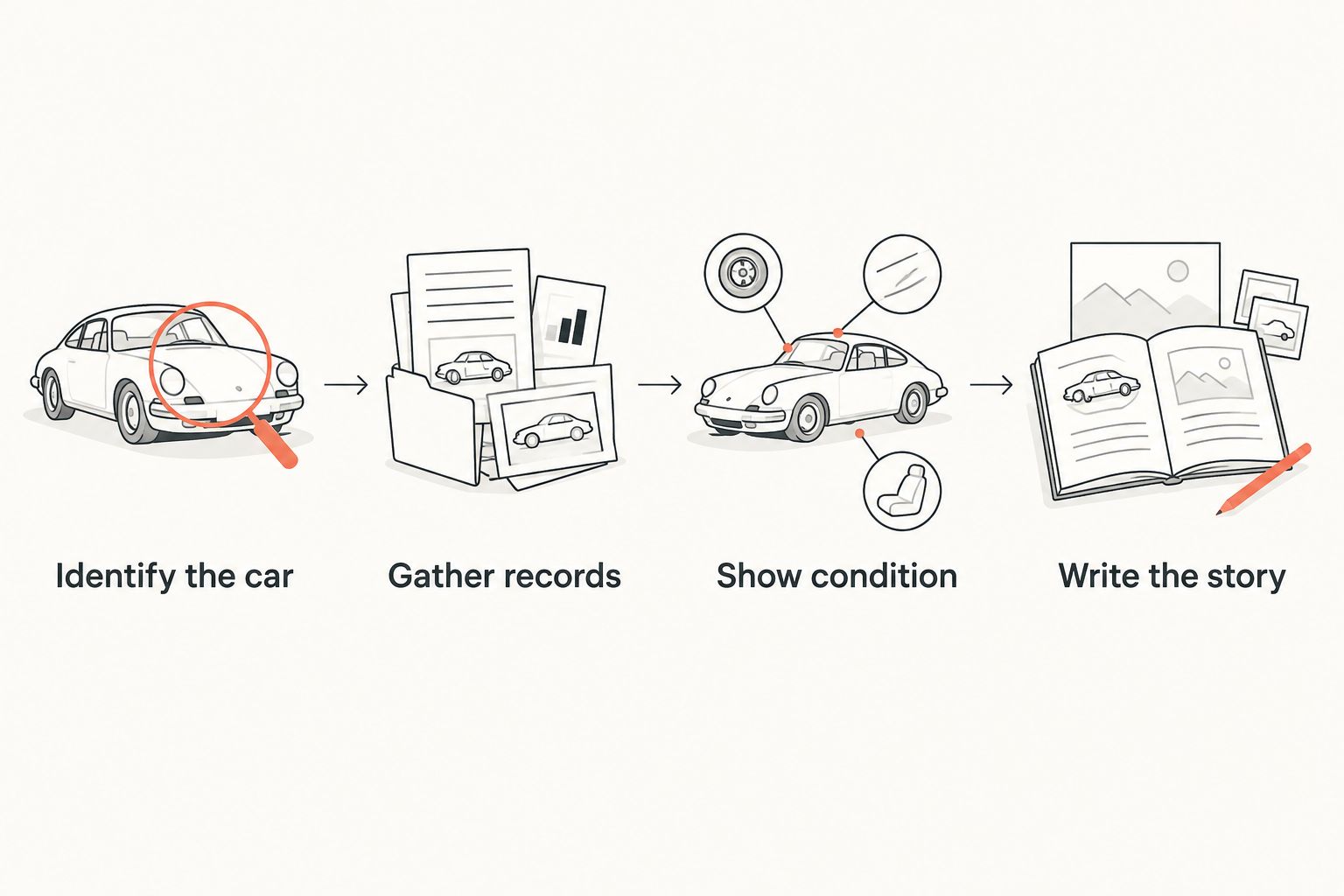
Use these four steps:
- Identify the car. Check that vehicle identification details match the ownership documents. Separate confirmed information from assumptions about originality or specification.
- Gather records. Start with 3 folders: service receipts, ownership documents, and restoration photos. These are suggested organizing categories, not marketplace requirements.
- Show condition. Plan an initial set of 12 photos, covering the exterior, cabin, engine bay, luggage area, underside where safely accessible, and visible faults. Add detail photographs rather than treating that starting number as a limit.
- Write the story. Explain your ownership, completed work, modifications, and outstanding jobs. Put known defects in clear language, not at the end of an enthusiastic paragraph.
Keep 2 copies of important digital records in separate storage locations as a practical backup habit. Protect personal information before sharing documents publicly, and distinguish a redacted listing copy from the original paperwork needed for the transaction.
How we ranked these selling options
This 2026 ranking uses buyer fit, selling format, evidence presentation, seller involvement, and transaction planning. Each recommendation occupies a different use case; the order is not a measured ranking of buyer numbers, selling speed, or sale results.
Hemmings is the default for a classic-focused classified listing. The digital-garage option comes first for owners who want records and stories central to their presentation. The auction and local-marketplace choices serve different ways of handling the sale.
Which classic-car selling platform should you choose?
For an undecided seller in 2026, start with Hemmings if you want a classic-focused classified listing. Choose Bring a Trailer when you prefer an enthusiast auction and are ready for public questions. Consider Cars & Bids when your later enthusiast vehicle fits its focus.
Choose a local marketplace when nearby inspection is the priority. Whatever the destination, finish your condition description first: the platform distributes the advertisement, but you supply the evidence.
FAQ
What's the best place to sell a classic car online?
Hemmings is the default recommendation for a classic-focused classified listing. Bring a Trailer suits an auction, while Moterno suits owners who want digital vehicle records and a community listing.
Is Bring a Trailer better than a classified listing?
Bring a Trailer is the better fit when you want public bidding and are comfortable answering detailed public questions. A classified listing fits sellers who prefer direct conversations and negotiation.
Can I sell a later classic on Cars & Bids?
Cars & Bids is focused on modern enthusiast vehicles. Check its current vehicle criteria to determine whether your particular car fits before preparing a submission.
Is Facebook Marketplace a good place to sell a classic car?
Facebook Marketplace is a useful choice when local inspection and collection are your priorities. You will need to screen inquiries and arrange the sale directly.
What should I include in a classic-car advertisement?
Include vehicle identification, condition photographs, service history, completed work, modifications, and known faults. Distinguish documented facts from recollections and disclose unanswered questions.
Should I publish my car's title and receipts online?
Do not publish unredacted documents containing personal information. Prepare suitable listing copies and retain the originals for the ownership-transfer process.
Does a digital service history replace an inspection?
A digital service history does not replace a physical inspection. Records describe documented work; an inspection assesses the vehicle's present condition.
One last thing
Photograph the fault you are most tempted to leave out. A cracked dashboard, unfinished repair, or patch of corrosion belongs in the listing, with a plain explanation. Give the buyer something concrete to ask about rather than a surprise at inspection.