
Best overall for collector-focused browsing: Hemmings. Best for keeping a car’s records and story together: Moterno; best for public auction discussion: Bring a Trailer—this 2026 guide compares where to search for classic Mustang cars for sale and what to check before committing.
- Hemmings is the default for collector-focused browsing of classic Mustang cars for sale.
- Moterno suits owners who want a classic Mustang marketplace alongside service history, documents, photos, and stories.
- Bring a Trailer suits buyers who want auction listings with public questions and comments.
- Choose the individual Mustang on its records and inspection, not the marketplace name.
Why this matters
A Mustang listing tells you what the seller wants you to see. Your job is to connect those photos and claims to the actual car. For your 2026 search, choose a marketplace that fits how you want to buy, then apply the same checks to every candidate.
What makes the best classic Mustang marketplace?
- Search fit: Can you separate the body style and condition you want?
- Supporting records: Can the seller substantiate service and restoration claims?
- Seller access: Can you ask detailed questions before committing?
- Buying format: Do you prefer an auction or a direct conversation?
- Inspection access: Will the seller accommodate an independent inspection?
Classic Mustang marketplaces at a glance
| Marketplace | Best for | Standout feature | Key limitation |
|---|---|---|---|
| Moterno | Ownership records and vehicle stories | Digital garage record-keeping alongside a community marketplace | Owner-entered records still need checking |
| Bring a Trailer | Public auction discussion | Auction listings with questions and comments | Bidding introduces a deadline |
| Hemmings | Collector-focused browsing | Automotive marketplace centered on enthusiast vehicles | Listing quality depends on the seller |
| ClassicCars.com | Classified listing searches | Marketplace dedicated to classic vehicles | A listing is not an independent inspection |
| eBay Motors | Comparing buying formats | Vehicle listings across auction and other selling formats | Terms and supporting evidence vary by listing |
The best marketplace is the one that helps you find a suitable car; the best purchase is the car whose condition and history you can verify. None of these platforms replaces a knowledgeable inspection. Keep that distinction clear throughout your 2026 search.
1. Moterno: best for classic Mustang ownership records
Moterno is a classic Mustang marketplace option for owners who want service history, documents, photos, and stories together. The platform combines a digital garage with a community marketplace where you can browse or list cars. Its record-keeping role also matters after the purchase, when you start adding your own maintenance and ownership history.
Remember when the seller said the suspension had been rebuilt? A dated receipt and photos of the work give you something concrete to review. Ask for those records rather than treating a detailed description as proof.
Moterno pros:
- Supports logging service history and vehicle documents.
- Gives owners a place to keep photos and stories.
- Combines vehicle record-keeping with browsing and listing cars.
Moterno cons:
- Uploaded records do not independently establish mechanical condition.
- An owner’s account of the car still needs supporting evidence.
Best for: An enthusiast who wants to preserve the car’s story as well as find or sell it.
Verdict: Buy through this route when the seller’s records and an independent inspection support the car—not simply because its story is appealing.
2. Bring a Trailer: best for public auction discussion
Bring a Trailer presents vehicles through online auctions with public comments and questions. For a classic Mustang buyer, that discussion creates another place to look for explanations about modifications, repairs, and condition. Read the listing and the conversation together.
A useful comment identifies something specific: an unexplained repair, a component that differs from the description, or a photo the seller should provide. A confident opinion without evidence is still just an opinion. Ask your own questions while there is time to receive and assess an answer.
Bring a Trailer pros:
- Public questions make the seller’s explanations visible to other readers.
- Auction listings bring photos and descriptions into one place.
- The discussion can identify issues to investigate before bidding.
Bring a Trailer cons:
- An auction deadline puts pressure on your decision.
- Public comments are not a substitute for inspecting the car.
- Bidding activity does not establish the car’s condition or suitability.
Best for: A prepared buyer who wants public discussion and is comfortable with an auction format.
Before bidding, read the current auction terms and decide what evidence you need. If the deadline arrives before you have that evidence, leave the car behind. Another bidder’s confidence does not answer your questions.
Verdict: Buy only after your inspection and document checks are complete; skip a deadline-driven bid with unresolved concerns.
3. Hemmings: best for collector-focused Mustang browsing
Hemmings is an automotive publication and marketplace with a collector-car focus. It is the default recommendation here for browsing classic Mustang listings because that focus matches the search. Use it to build a shortlist, not to assume every advertised car meets the same standard.
Start with your intended use. A Mustang for regular driving, a restoration project, and a car bought for originality require different questions. A description that suits one buyer can describe exactly the wrong car for another.
Hemmings pros:
- Collector-car focus fits a classic Mustang search.
- Vehicle listings provide a starting point for comparing candidates.
- Seller descriptions help you identify questions about condition and history.
Hemmings cons:
- Detail and supporting documentation vary between listings.
- Collector-focused placement does not authenticate restoration claims.
- You still need to establish the seller’s authority to sell.
Best for: A buyer starting a collector-focused search before narrowing down individual cars.
For your 2026 shortlist, separate documented facts from descriptive language. Restored, original, and rebuilt need explanations: what was done, who did it, and which records support it? Keep unanswered questions attached to the listing rather than filling the gaps yourself.
Verdict: Buy when the car matches your intended use and its condition claims survive inspection.
4. ClassicCars.com: best for classified listing searches
ClassicCars.com is a marketplace dedicated to classic vehicles. Its classified-style listings suit buyers who want to browse candidates and ask sellers about individual cars. This route keeps your attention on the listing and your conversation with the seller rather than a public auction discussion.
Compare cars using the same questions. Ask each seller about corrosion, previous body repairs, drivetrain changes, and supporting paperwork. Consistent questions make differences easier to see than comparing enthusiastic descriptions.
ClassicCars.com pros:
- Classic-vehicle focus matches the category you are shopping.
- Listings give you individual candidates to investigate.
- Seller conversations let you ask questions specific to your intended use.
ClassicCars.com cons:
- Seller descriptions need independent verification.
- Photo coverage and records vary by car.
- A classified advertisement does not establish mechanical soundness.
Best for: A buyer who prefers browsing listings and discussing a car directly with its seller.
Request missing evidence before arranging travel. If the listing shows the paint but not the underside, ask for underside photos. If it describes major engine work, ask for the corresponding records. Keep the conversation specific enough that the seller can answer clearly.
Verdict: Buy after a consistent comparison and inspection; hold when essential photos or documents remain unanswered.
5. eBay Motors: best for comparing buying formats
eBay Motors carries vehicle listings in different selling formats, including auctions. It suits buyers willing to read each listing’s terms carefully rather than treating every advertisement as the same type of transaction. Establish how the particular listing works before concentrating on the car.
Then examine the evidence. A seller’s reputation gives context about transactions, but it does not describe corrosion, previous repairs, or drivetrain condition on this Mustang. Keep account-level information separate from vehicle-level proof.
eBay Motors pros:
- Offers different vehicle selling formats to compare.
- Listings provide photos and descriptions for initial screening.
- Seller information adds transaction context alongside the advertisement.
eBay Motors cons:
- Listing terms require careful reading.
- Seller reputation does not verify the advertised vehicle’s condition.
- You must arrange appropriate inspection and document checks yourself.
Best for: A buyer comfortable reviewing transaction terms and investigating a vehicle independently.
Do not assume that a platform feature protects you against every problem. Read the current terms that apply to the specific transaction, and resolve ownership and inspection questions before committing.
Verdict: Buy when both the car and the transaction terms pass your checks; skip listings that leave either unclear.
How this ranking works
This 2026 ranking assigns each marketplace a distinct buying use case: ownership records, public auction discussion, collector-focused browsing, classified searches, or buying-format comparison. It follows the criteria above rather than claiming a measured winner for inventory size, transaction outcomes, or vehicle quality.
Hemmings takes the default browsing recommendation because its collector-car focus fits the query. The other choices serve different preferences. Your shortlist should change when your preferred buying format changes—not because a marketplace name makes an undocumented car trustworthy.
Check the Mustang before choosing the transaction
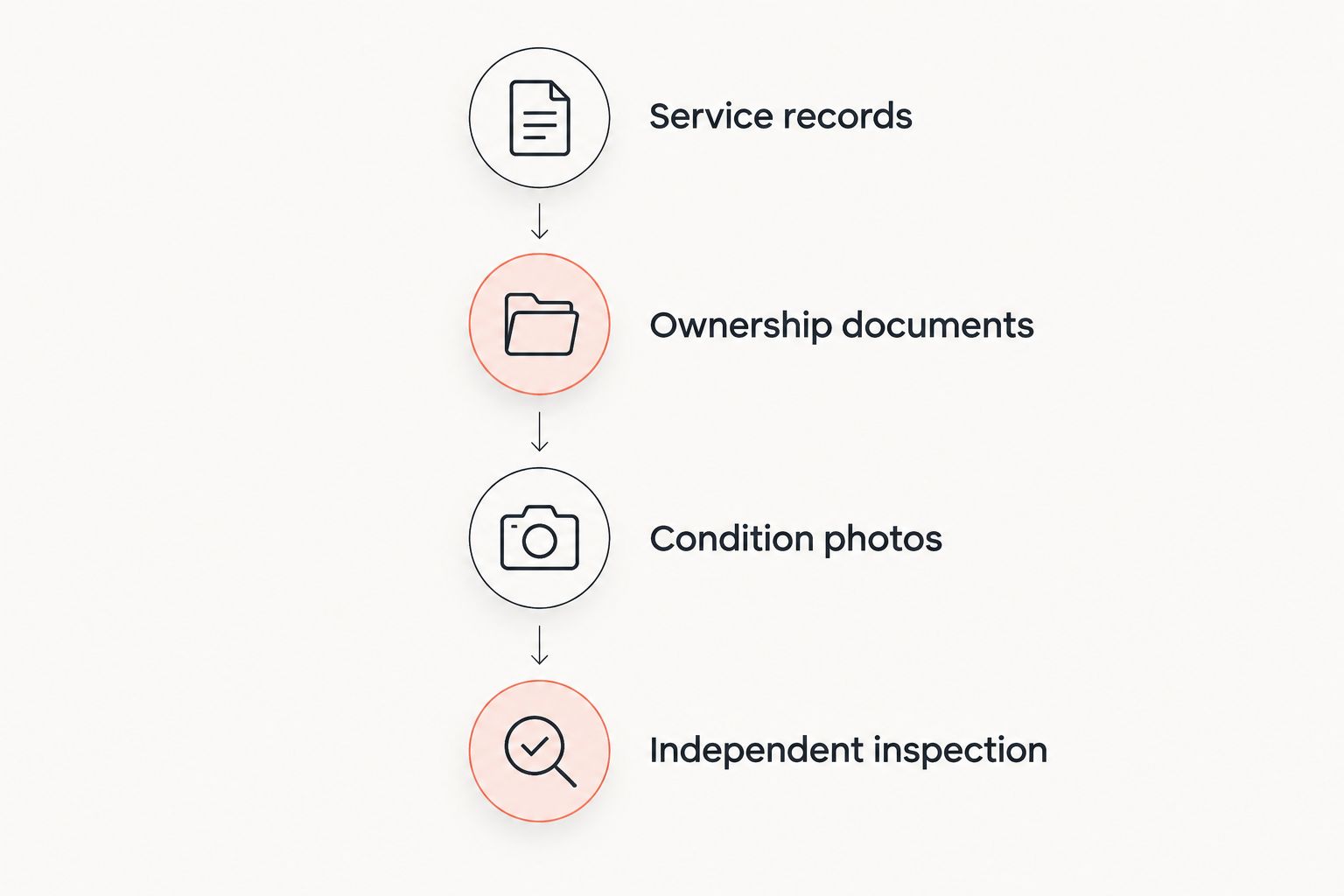
Use the same evidence sequence wherever you find classic Mustang cars for sale. Start with the seller’s claims, request the supporting material, and inspect the actual car before deciding. These checks apply to a 2026 purchase regardless of the listing format.
Service records
Ask for dated invoices, maintenance entries, and restoration paperwork. Match each important claim to a record: an engine rebuild needs more explanation than a general statement that the car runs well. Where records are incomplete, keep that gap visible in your decision.
Ownership documents
Review the ownership documents and compare the vehicle identification shown there with the car. Confirm the seller’s authority to sell and check the requirements of the relevant motor vehicle agency. Registration and title rules depend on jurisdiction; an appealing listing does not resolve them.
Condition photos
Ask for clear views of the underside, floor areas, trunk, engine compartment, and any disclosed repairs. Photos help you decide whether to continue, but they cannot establish every condition issue. Do not let a polished exterior become your evidence for the structure beneath it.
Independent inspection
Arrange an inspection by someone familiar with classic Mustangs. Ask the inspector to evaluate structure, previous repairs, mechanical condition, and whether the car suits your intended use. Make inspection access part of your buying decision, not a task left until after commitment.
Keep a short written list of unresolved questions. It helps you distinguish a car you understand from one you simply like. When a seller supplies new information, update the list rather than relying on your memory of a conversation.
Which classic Mustang marketplace should you choose?
Start with Hemmings if you want a collector-focused browsing route. Choose Bring a Trailer if public auction discussion fits your buying style, ClassicCars.com for classified searches, or eBay Motors when you want to compare selling formats.
Choose Moterno when vehicle records and the ownership story are central to what you want to keep. Whatever route you take, do not commit until the documents, inspection, and transaction terms support the purchase. A marketplace helps you find the car; your checks determine whether to buy it.
FAQ
What’s the best marketplace for classic Mustang cars for sale?
Hemmings is the default recommendation for collector-focused browsing. Bring a Trailer suits public auction discussion, while classified and other marketplace routes suit different buying preferences.
Is Moterno just a place to list cars?
Moterno also provides digital vehicle record-keeping for service history, documents, photos, and stories. Its community marketplace sits alongside that ownership record.
Is Bring a Trailer better than a classified marketplace?
Bring a Trailer is the better fit when you want public auction discussion and accept a bidding deadline. A classified marketplace fits buyers who prefer browsing advertisements and discussing individual cars with sellers.
Should I buy a classic Mustang without seeing it?
Arrange an independent inspection before committing to a classic Mustang you have not inspected yourself. Listing photos and seller descriptions do not replace checking the actual car.
What paperwork should I ask for before buying a classic Mustang?
Ask for ownership documents, service invoices, and records supporting restoration or repair claims. Check the documents against the car and confirm the requirements of the relevant motor vehicle agency.
Does a detailed service history prove a Mustang is in good condition?
A detailed service history supports maintenance claims but does not prove current condition. Review the records alongside an independent inspection.
What should I do if the seller won’t allow an inspection?
Skip the purchase if you cannot obtain the independent inspection you need. A seller’s description is not a replacement for checking condition before commitment.
One last thing
Ask the seller to explain one significant repair from start to finish: what prompted it, what was replaced, and what paperwork remains. Then compare the answer with the records and inspection. That small, specific conversation is more useful than asking whether the car has been looked after.