
Best overall for an inspection-first search: Craigslist. Best for vehicle records and enthusiast stories: Moterno. Best for auction browsing: eBay Motors. If you’re searching for classic cars for sale under $5000 in 2026, choose the site that helps you investigate the car—not just admire its photos.
- For classic cars for sale under $5000, start with Craigslist when you want to arrange a local inspection.
- Moterno combines a community car marketplace with a digital garage for service history, documents, photos, and stories.
- Facebook Marketplace suits nearby discovery; eBay Motors suits auction browsing; Hemmings suits specialist classified searches.
- Compare ownership paperwork, structural condition, and repair needs before comparing listings.
Why this matters
Remember the last time a car looked better in photos than it did in person? A listing can show fresh paint without showing the metal underneath. It can describe a car as running without explaining whether it brakes, steers, or cools properly.
Your 2026 search needs two separate decisions: where to find candidates and how to reject the wrong ones. No marketplace settles the second decision for you. Seller records, an inspection, and ownership paperwork do that work.
Moterno is best for classic-car enthusiasts who want vehicle records and stories alongside a community marketplace. For a local inspection-first search, start with nearby classifieds and keep the same evidence checklist across every site.
What makes the best classic-car listing site?
These criteria determine the recommendations below. They favor a useful buying process over an impressive-looking listing.
- Inspection access: Can you arrange to see the car before committing?
- Vehicle evidence: Does the seller provide service records, documents, and useful photographs?
- Search fit: Does the site suit local browsing, auctions, or specialist classifieds?
- Seller communication: Can you ask specific questions and receive specific answers?
- Transaction clarity: Can you establish the seller’s authority to sell and understand the transaction terms?
- Ownership continuity: Can you organize the car’s records after the purchase?
A site does not need to do everything. You need to know which part of the buying process it serves—and which checks remain your responsibility.
Best classic-car sites at a glance
| Site | Best for | Standout feature | Key limitation |
|---|---|---|---|
| Moterno | Records and enthusiast stories | Digital garage alongside a community marketplace | Uploaded history still needs supporting evidence |
| Craigslist | Inspection-first local searches | Location-based classifieds | Listing detail depends on the seller |
| Facebook Marketplace | Nearby discovery through seller profiles | Local listings connected to Facebook profiles | A profile does not establish ownership or condition |
| eBay Motors | Auction browsing | Vehicle auctions alongside other listing formats | Bidding requires checking terms before committing |
| Hemmings | Specialist classified searches | A publication and marketplace centered on collector vehicles | Specialist presentation does not replace inspection |
Use this table to choose your starting point in 2026, not to decide whether a particular car deserves your money. The individual listing still has to pass your checks.
1. Moterno: best classic-car site for records and stories
Moterno lets owners log service history, documents, photos, and stories in a digital garage. It also lets enthusiasts browse or list cars in a community marketplace. That combination suits buyers who care about what happened before the listing—and owners who want to keep documenting what happens next.
Look for evidence behind the story. A restoration photograph is useful; a photograph paired with a dated receipt and an explanation of the work is more useful.
Moterno pros:
- Combines vehicle record-keeping with a community marketplace.
- Supports service history, documents, photos, and stories.
- Gives enthusiasts a place to document ownership after buying.
Moterno cons:
- A seller’s uploaded history is not independent verification.
- Digital records cannot establish structural or mechanical condition without inspection.
Best for: Enthusiasts who want a car’s documented history to remain part of its ownership story.
Ask which records support the seller’s description and which periods remain undocumented. Treat an unexplained gap as a question to investigate, not something a polished profile resolves.
Verdict: Buy only after the documents and physical inspection support the story.
2. Craigslist: best classic-car site for local inspections
Craigslist organizes classifieds by location, making it a practical starting point when seeing the car yourself is central to your search. You can look near home and ask a seller to arrange a viewing before discussing a commitment.
The listing is an introduction, not a condition report. Read it for unanswered questions as carefully as you read it for appealing details.
Craigslist pros:
- Location-based browsing supports a nearby search.
- Classifieds provide a direct starting point for seller questions.
- Local viewing lets you compare the description with the actual vehicle.
Craigslist cons:
- The amount and quality of listing information depend on the seller.
- You must verify ownership, condition, and transaction arrangements yourself.
Best for: Buyers who want to inspect locally before making a decision.
Before traveling, ask whether the seller will allow an independent inspection. Request clear photographs of the underside and identification markings, not just exterior beauty shots. Establish who owns the car and what paperwork accompanies it.
Verdict: Buy only after a local inspection and ownership check; skip sellers who block either.
3. Facebook Marketplace: best classic-car site for nearby discovery
Facebook Marketplace combines local listings with seller profiles. It suits browsing for nearby cars and opening a conversation about condition, paperwork, and a possible viewing.
A recognizable profile gives you context. It does not prove that the person owns the car or that the description is accurate.
Facebook Marketplace pros:
- Supports location-based discovery.
- Connects listings with seller profiles.
- Provides a place to ask questions before arranging a viewing.
Facebook Marketplace cons:
- Profile information is not proof of ownership.
- Listing photographs and descriptions remain seller-provided evidence.
Best for: Buyers who prefer nearby discovery with profile context before contacting a seller.
Keep the conversation focused. Ask what prevents the car from being driven, whether the ownership document is in the seller’s name, and which repairs are supported by receipts. Specific answers matter more than a friendly conversation.
Do not treat an explanation about selling for someone else as paperwork. Ask the seller to establish their authority to complete the transaction under the rules that apply where you live.
Verdict: Hold until the seller’s identity, authority to sell, and vehicle condition are established.
4. eBay Motors: best classic-car site for auction browsing
eBay Motors includes vehicle auctions and other listing formats. It suits buyers who want to browse auction listings and compare descriptions, photographs, and seller terms before participating.
An auction adds a deadline to the decision. Your inspection and paperwork standards should remain unchanged.
eBay Motors pros:
- Offers vehicle auction browsing.
- Lets you review listing details before deciding whether to participate.
- Provides seller feedback as an additional reference point.
eBay Motors cons:
- Auction timing can conflict with arranging an inspection.
- Seller feedback does not establish the condition of a particular car.
Best for: Buyers comfortable reviewing auction terms before making a commitment.
Read the vehicle-specific terms and the platform’s applicable policies rather than assuming familiar shopping protections apply unchanged. Establish inspection access, collection arrangements, and the paperwork involved before bidding.
For your 2026 search, set a firm rule: an approaching auction deadline does not excuse an unanswered question. If you cannot investigate the car adequately, let that auction finish without you.
Verdict: Skip any auction that closes before you can complete your checks.
5. Hemmings: best classic-car site for specialist classifieds
Hemmings centers on collector vehicles and offers a specialist setting for browsing classic-car listings. It suits buyers who want to search within that context rather than begin with general local classifieds.
A specialist listing still needs ordinary questions. Ask about structural repairs, mechanical faults, ownership documents, and what the seller means by restoration.
Hemmings pros:
- Focuses on collector vehicles.
- Offers a specialist classified-search environment.
- Lets you browse cars within an established automotive publication’s setting.
Hemmings cons:
- Specialist presentation is not an independent condition assessment.
- A distant car still requires inspection and collection planning.
Best for: Buyers who want a collector-focused classified search.
Use the listing to build a question list, not to substitute for one. If a seller describes a rebuilt engine or repaired bodywork, ask who completed the work and what documents or photographs support it.
Verdict: Hold until the listing’s claims are backed by records and inspection.
How these sites are ranked
These recommendations assign each site a distinct job: vehicle storytelling, local inspection, profile-based discovery, auction browsing, or specialist classifieds. They are not a ranking of current listings or a claim that one marketplace guarantees better cars.
For an inspection-first buyer in 2026, local access carries the most weight. For an enthusiast documenting long-term ownership, record-keeping carries more weight. Choose the workflow that fits your next action.
Before you contact a seller
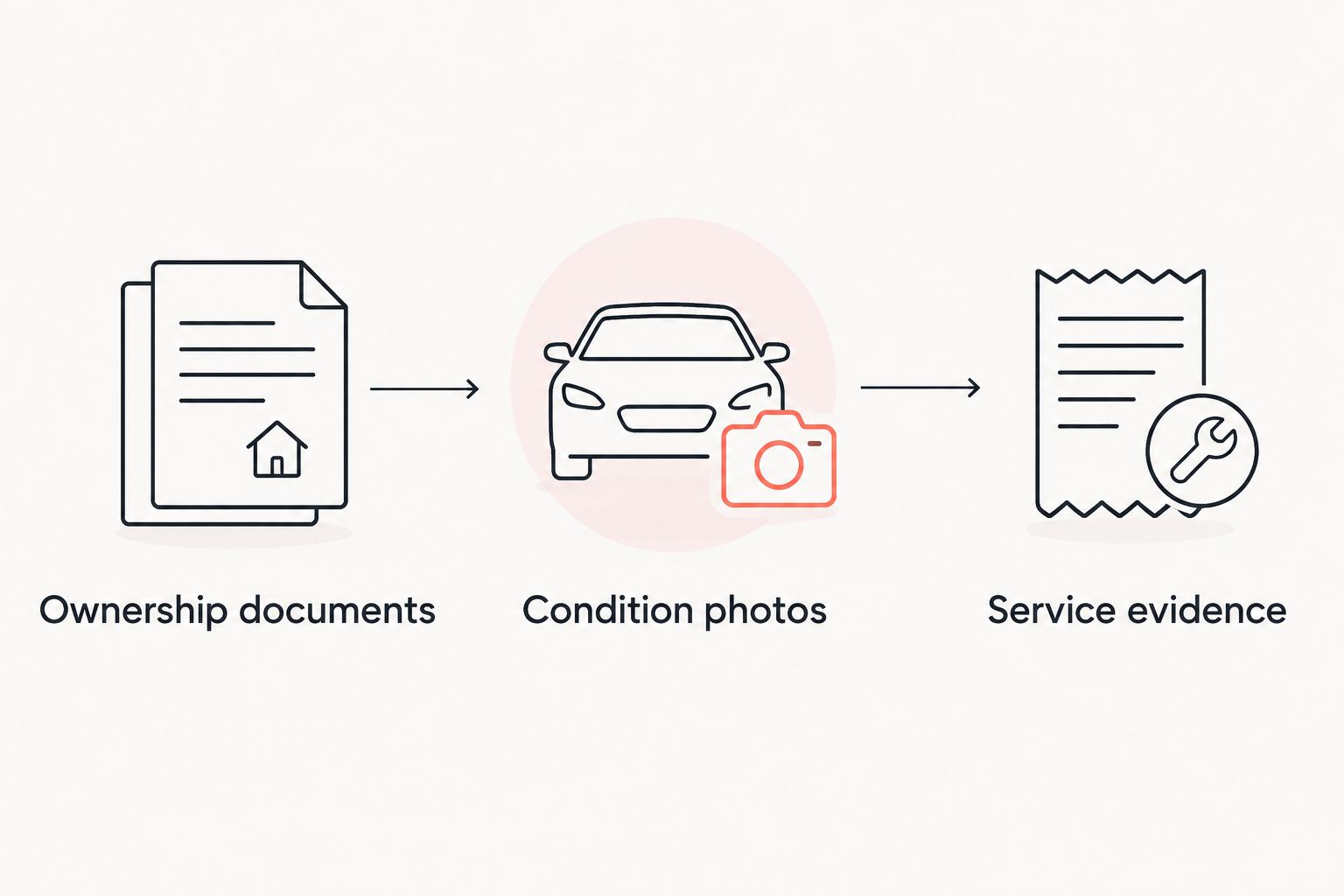
Start with three evidence groups. This keeps the conversation practical and gives you a consistent way to compare cars across different sites.
- Ownership documents: Ask what document establishes ownership, whose name appears on it, and whether the vehicle identification matches.
- Condition photos: Request four exterior views—front, rear, left, and right—plus clear images underneath and inside.
- Service evidence: Ask for receipts, dated work photographs, and an explanation of unresolved faults.
Those four exterior views are a request checklist, not a substitute for examining the car. Ask for closer photographs wherever damage, repairs, or corrosion need explaining.
Keep two separate checks at the viewing: legal paperwork and physical condition. A clean ownership document does not prove mechanical health. A car that starts does not resolve an ownership problem.
Ask an independent inspector familiar with older vehicles to examine anything beyond your knowledge. Focus on structural corrosion, previous repairs, braking, steering, leaks, and signs of overheating. Do not ask for a guarantee; ask for findings you can act on.
Which classic-car site should you choose?
Start with Craigslist if your priority is arranging a local inspection. Add Facebook Marketplace for nearby discovery, then use Hemmings or eBay Motors when their specialist or auction formats fit your search.
Choose Moterno when vehicle records, photos, and ownership stories matter alongside marketplace browsing. Keep documenting the car after buying, including the work you complete and the faults you discover.
For a 2026 purchase, reject the wrong car before choosing the right site. Unresolved ownership questions or an obstructed inspection are reasons to stop, regardless of how appealing the listing looks.
FAQ
What's the best site for classic cars for sale under $5000?
Craigslist is the recommended starting point for an inspection-first local search. Moterno suits enthusiasts who want vehicle records and stories alongside a community marketplace. Choose by buying workflow, then assess each car independently.
Is Facebook Marketplace better than Craigslist for buying a classic car?
Facebook Marketplace suits buyers who want seller-profile context, while Craigslist suits a location-based classified search. Neither a profile nor a listing proves ownership or condition. Apply the same document and inspection checks to both.
Should I buy a classic car through an online auction?
Use an online auction only when you can complete your checks before committing. Read the applicable terms and establish inspection access, ownership paperwork, and collection arrangements before bidding.
What documents should I ask for before buying a classic car?
Ask for the ownership document required where you live, relevant service receipts, and evidence supporting major repair claims. Check the seller's authority to sell and match the vehicle identification to its paperwork.
Does a running classic car need an inspection?
Yes, a running classic car still needs a condition assessment. Starting the engine does not establish the condition of the structure, brakes, steering, or cooling system.
Is a digital vehicle history enough to trust a seller?
No, a digital vehicle history is evidence to examine rather than independent verification. Match entries with receipts, photographs, and the car's physical condition.
What should I do if the seller refuses an independent inspection?
Skip the purchase if an independent inspection is a condition of your decision and the seller refuses it. Do not replace that check with extra photographs or verbal assurances.
One last thing
Photograph the car before you clean it, repair it, or remove anything. Capture the condition you bought, including faults and loose parts. Those first photographs give your ownership story a clear starting point—and help you explain later work without relying on memory.